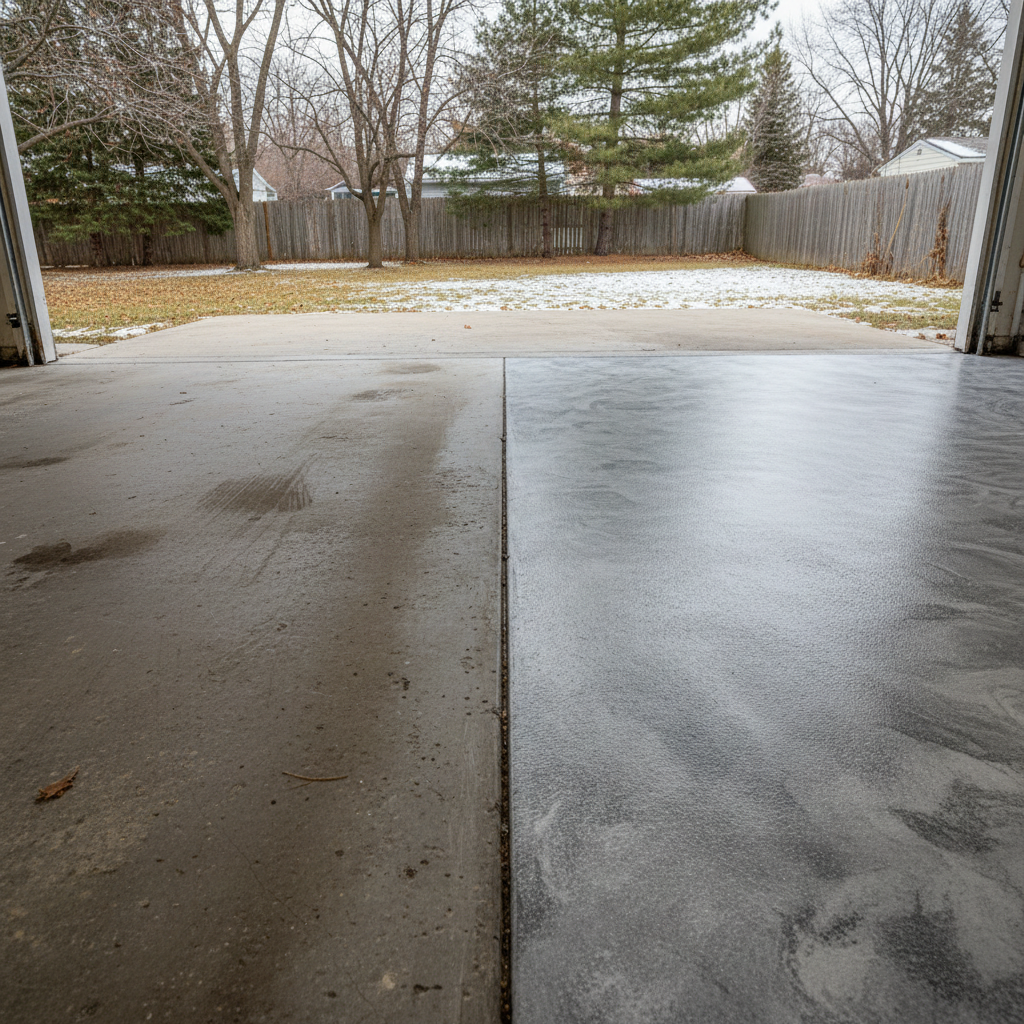
Alright, let's talk concrete coatings. You're probably looking to spruce up your garage floor, basement, or maybe even an outdoor patio here in Superior. You want something tough, good-looking, and that'll actually last. When people start checking out decorative concrete, they usually hear about two main types: epoxy and polyurea. Now, both can look great, but they're not the same, especially when you think about what our weather throws at us up here.
Epoxy Coatings: The Old Standard
Epoxy's been around for ages, and there's a good reason for that. It's a solid product, and when someone installs it correctly, it can really transform a dull concrete slab into something sharp. You can get it in all sorts of colors, and with flakes or other additives, it can mimic granite or terrazzo pretty well. It's usually a bit cheaper upfront than polyurea, which often really appeals to homeowners.
Here's the thing with epoxy, though: it's pretty rigid. That sounds good, but concrete moves, doesn't it? It expands and contracts with temperature changes, and we get some serious swings here in Superior. Think about those -20°F winter days followed by a sudden thaw, or the heat of summer. That constant movement can stress epoxy, and over time, you might start seeing cracks or delamination, especially in high-traffic areas or if the concrete underneath isn't perfectly stable. It also doesn't handle UV light very well. If you put it on an outdoor patio or even in a garage that gets a lot of sunlight, it can yellow and get chalky over time. Plus, it's not as resistant to some chemicals or hot tires as polyurea.
Polyurea Coatings: The Modern Contender
Now, polyurea (or polyaspartic polyurea, to be precise, which is what we mostly use at Superior Concrete Coatings) is a newer technology, and it's built differently. The biggest advantage? Flexibility. This stuff is way more elastic than epoxy. That means it can handle your concrete slab's expansion and contraction much better, which really cuts down on the risk of cracking or peeling. For us up here, where the ground freezes and thaws and your garage floor is constantly going from freezing cold to warm, that flexibility is a huge plus.
Polyurea is also incredibly durable. It's much more resistant to abrasions, chemicals, and those hot tires that can lift epoxy right off the floor. And unlike epoxy, it's UV stable. You can put it outside on your front porch or back patio, and it won't yellow or fade in the sun. It also cures a lot faster, meaning you can often get your garage back in action in just a day or two, compared to epoxy's longer cure times.
The main downside for some folks is the cost. Polyurea is typically more expensive per square foot than epoxy. But you've got to weigh that against how long it lasts and how little maintenance it needs. Think of it as an investment, really.
My Recommendation for Superior Homeowners
Look, I've seen a lot of concrete floors over the years, from the older homes in the Central Park neighborhood to the newer builds out by Lake Nebagamon. Given our climate — the brutal winters, the freeze-thaw cycles, the road salt, and the occasional hot summer days — my clear recommendation for most applications, especially garages and outdoor areas, is polyurea.
While epoxy can be a good, budget-friendly option for certain low-stress interior applications, for anything that's going to see real wear and tear, big temperature changes, or sunlight, polyurea is the way to go. It's simply a more robust, longer-lasting solution that's better suited to stand up to what life (and Mother Nature) throws at your concrete here in Superior.
You'll pay a bit more upfront, but you'll save yourself headaches and potential repair costs down the line. When you're looking for a coating that's going to look great and perform year after year without fuss, polyurea is the smart choice. Give us a call at Superior Concrete Coatings if you want to talk specifics about your project.