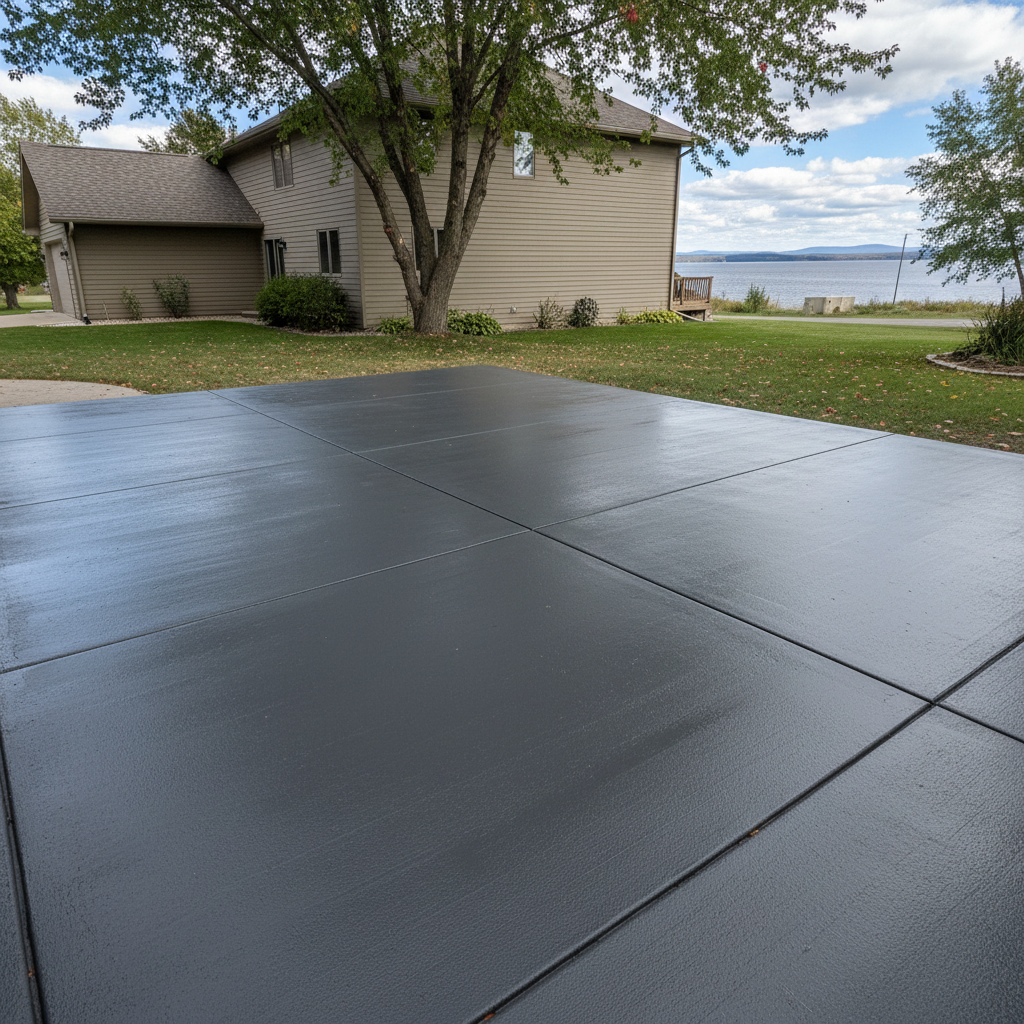
You did not invest in concrete sealing just to watch it fail after one brutal winter up here by the lake. Between the heavy lake-effect snowstorms dumping feet of powder on our driveways and the absolute mountain of rock salt the city trucks drop on every single street, your concrete takes a beating. Superior Concrete Coatings is going to walk you through what it actually takes to keep your sealed concrete surfaces looking sharp and holding strong year after year, without any fluff or unrealistic expectations.
How to Extend the Life of Your Sealed Concrete
Keeping that Floor Refinishing sealer working hard starts with basic hygiene. Do not let leaves pile up and rot on your patio all through November. When wet leaves sit on sealed concrete, they trap moisture and organic acids that slowly eat away at the top protective layer. In the winter, get yourself a plastic snow shovel. Metal edges will gouge right through a good sealer and scratch the concrete underneath before you even realize what happened.
Wash off the winter salt buildup as soon as spring finally hits around April. That white crust is not just dirty; it is a concentrated cocktail of chlorides that degrades sealers and pits the surface if left sitting there baking in the spring sun. A simple garden hose and a stiff-bristled push broom work wonders. If you use a pressure washer, keep the pressure reasonable and the nozzle moving. Blasting an inch away from the surface at three thousand psi is a great way to blast your Floor Refinishing sealer right off.
Regular Maintenance Routine
You do not need a complicated schedule to keep your floors in shape. Every spring and fall, give your concrete a thorough once-over. Sweep it clean, rinse it down, and look closely at how it sheds water. If water starts soaking into the concrete instead of beading up on top like rain on a waxed car, your sealer is getting thin. For high-traffic garage floors or pool decks around Superior, a quick neutral cleaner wash every few months keeps oil, grime, and de-icing chemicals from bonding to the surface. Superior Concrete Coatings always tells homeowners that a little garden hose action goes a long way toward stretching out the timeline between major recoats.
Warning Signs of Failing Sealer
Concrete talks to you if you know how to listen. Watch for dusting, which is when the surface feels chalky and leaves fine gray powder on your shoes. That means the cement paste is starting to break down. Another dead giveaway is flaking or peeling clear coats, or dark patches where moisture is soaking straight into the pores instead of staying on top. If you notice white, powdery mineral deposits pushing through the surface from underneath, you are dealing with efflorescence. That means moisture is getting trapped in the slab, usually because the sealer was applied too thick or the concrete is drawing up ground moisture from our soggy spring thaws.
When to Call a Professional
Some things you can handle with a jug of cleaner and a Saturday afternoon, but other times you need to bring in backup. If you see widespread peeling, deep pitting where the winter freeze-thaw cycles have popped chunks out of the aggregate, or heavy staining that will not budge with standard degreasers, it is time to stop messing around with do-it-yourself fixes. Trying to patch a failed coating over old, degraded sealer usually ends in total disaster because the new product cannot bite into the surface. Superior Concrete Coatings provides Floor Refinishing services for homes and businesses in Superior, WI, so give us a ring if your floors need a proper mechanical grind and a fresh, professional-grade application that can actually handle another round of Northern Wisconsin weather.